

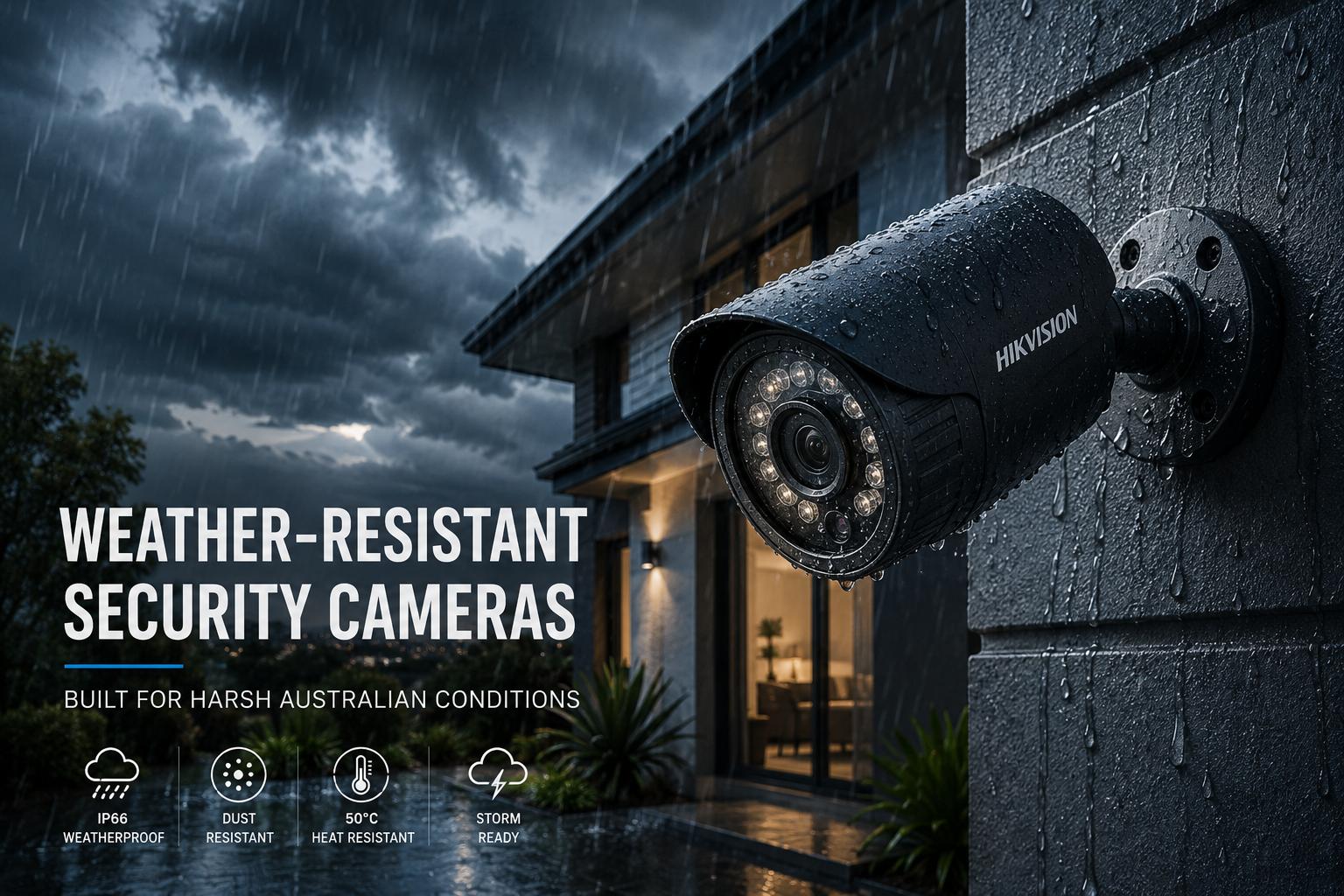
In this guide, we’ll explain how climate factors should influence equipment choice, outline practical tips for your home security system, and leave you with proven advice for long-term durability.
KEY TAKEAWAYS
|
Why Climate-Ready Surveillance Matters in Perth
Perth homes increasingly rely on CCTV systems built around durability — meaning your system needs to withstand environmental stress as well as deliver image quality.
The right home security design can block fine dust particles common across Perth summers, protecting internal components from abrasion damage. Heat-tolerant circuitry maintains stable operation when rooflines and walls absorb extreme temperatures. The result is fewer breakdowns, reduced servicing needs, steadier footage capture, and dependable alerts.
Environmental Responsibility and Compliance
Environmental Considerations for Residential Setups
Modern camera hardware uses low-power components that reduce ongoing energy draw, particularly when paired with efficient recorders. Heat-rated casings limit premature failure, cutting electronic waste caused by frequent replacements. Selecting sealed units also prevents dust ingress that often leads to early disposal.
Local Permits and Council Awareness
Most residential properties across Perth metro areas rarely require formal council approval. Installations remain compliant when equipment stays within property boundaries without encroaching onto public land. Mounting near eaves, garages, or boundary lines generally remains acceptable. Situations involving heritage-listed homes, strata complexes, or shared walls may require body corporate notification.
Privacy, Legal Use, and Inspection Standards
Cameras must avoid recording private neighbouring spaces such as bedrooms or enclosed yards. Public footpaths may appear incidentally, provided the recording serves legitimate security purposes.
Matching Protection to Your Property
Assessing Layout, Exposure, and Daily Activity
Every home presents unique requirements. Single-storey homes often face broader perimeter exposure, while double-level properties introduce height, shadowing, and varied sightlines. Entry points, vehicle access, side passages, and rear yards all deserve careful review.
Environmental exposure also matters — coastal salt air, inland dust, and direct afternoon sun influence placement choices. Understanding daily movement patterns helps ensure coverage aligns with real behaviour, especially after working out how many cameras a typical Perth home actually needs.
Supporting Tools and Components
Cabling, Power, Network Stability
Quality cabling rated for heat prevents signal loss over time. A proper power supply avoids dropouts during peak temperature loads. Network connectivity supports remote viewing, notifications, and secure access without interruption.
Mounting Hardware and Protective Accessories
Secure brackets rated for wind load keep equipment stable through seasonal storms. Weather-sealed junction boxes protect connection points from moisture, insects, and airborne grit. Correct fixings preserve exterior finishes while maintaining long-term strength.
Planning for Future Expansion
Forward-thinking homeowners often allow room for growth — spare channels, scalable storage, and flexible mounting positions. Future additions such as lighting integration, alarms, and smart access controls become simpler when groundwork anticipates expansion. Planning ahead saves cost, reduces disruption, and extends system lifespan.
Inside a Climate-Ready Surveillance System
Core Camera Units
For Perth conditions, weather-rated housings with high IP sealing prevent dust ingress, moisture exposure, and corrosion near coastlines. Metal-bodied designs outperform plastic under prolonged heat. Look for wide dynamic range sensors, strong low-light performance, and heat tolerance beyond 50°C.
Sensor Quality and Climate Tolerance
Larger image sensors handle glare from sunlit driveways while maintaining detail in shaded areas. Thermal stability ensures consistent colour reproduction during extreme temperature swings. Reliable chipsets reduce artefacts during hot afternoons.
Recording, Storage, and System Control
Central recording equipment manages footage, alerts, and remote access. Units supporting multiple channels allow future growth. Storage capacity should match recording duration expectations, climate resilience, and vibration resistance.
Storage Media Built for Heat
Surveillance-grade hard drives operate continuously without overheating. Standard desktop drives degrade quickly under constant load, especially during summer peaks. Choose models rated for high ambient temperatures.
Connectivity, Power, and Infrastructure
Signal stability depends on quality infrastructure. Heat-rated cabling resists insulation breakdown. Power delivery must remain consistent during voltage fluctuations. Network hardware supports secure remote viewing.
Cabling and Network Compatibility
Outdoor-rated Ethernet prevents brittleness from UV exposure. Shielded cables reduce interference near electrical lines. Routers supporting VLANs enhance security and reliability.
Software, Monitoring, and Smart Features
Modern platforms integrate mobile access, alerts, and intelligent detection. Choose systems offering intuitive apps, encrypted connections, and firmware updates.
Intelligent Detection Capabilities
Motion filtering reduces false alerts triggered by trees, pets, and shifting shadows. Advanced analytics improve reliability without increasing workload — especially when homeowners understand how SMD and TiOC features reduce nuisance notifications.
Mounting Hardware and Enclosures
Mounting components often determine longevity. Rust-resistant brackets and sealed junction boxes protect connection points. Wind-rated fixings prevent movement during storms.
How Much Do Weather-Resistant Security Cameras Cost?
| Cost Component | What Influences Price | Typical Range |
|---|---|---|
| Camera units | Resolution, heat rating, analytics capability | $200 – $600 per unit |
| Recording hardware | Channel capacity, storage size, and durability | $600 – $1,500 |
| Storage media | Surveillance-grade capacity, heat tolerance | $200 – $600 |
| Cabling and accessories | Outdoor rating, run length, protection | $150 – $400 |
| Installation labour | Height, access, complexity, configuration | $600 – $1,800 |
| Optional upgrades | Smart detection, remote access, expansion | Variable |
For a deeper dive, check out our Perth CCTV Pricing Guide.
Key Takeaways
- Perth’s climate places extreme stress on outdoor surveillance through heat, humidity, airborne dust, and salt exposure.
- Weather-resistant design, sealed housings, and heat-rated electronics dramatically extend reliability and reduce failures.
- Environmental responsibility matters — efficient hardware lowers energy use while reducing electronic waste.
- Council permissions rarely apply to residential setups, yet privacy boundaries, strata rules, and heritage overlays still require awareness.
- Property layout, daily activity patterns, and future expansion plans should guide coverage design.
- Durable components, surveillance-grade storage, and quality cabling form a foundation for long-term performance.
- Correct installation techniques prevent moisture ingress, overheating, cable degradation, and safety hazards.
- Professional installation becomes essential when height access, electrical integration, and complex networking arise.
- Smart planning prioritises longevity, scalability, and warranty protection over the lowest upfront cost.
Ready for Climate-Smart Protection? Let’s Chat
Choosing equipment that survives Perth conditions deserves tailored advice, not guesswork. Speak with Connect & Protect for clear guidance shaped around your property layout, exposure risks, and future plans.
Our licensed experts listen first, then design a configuration that avoids costly mistakes while delivering long-term reliability.
Reach out today for personalised recommendations or a free quote — no hidden costs.
