

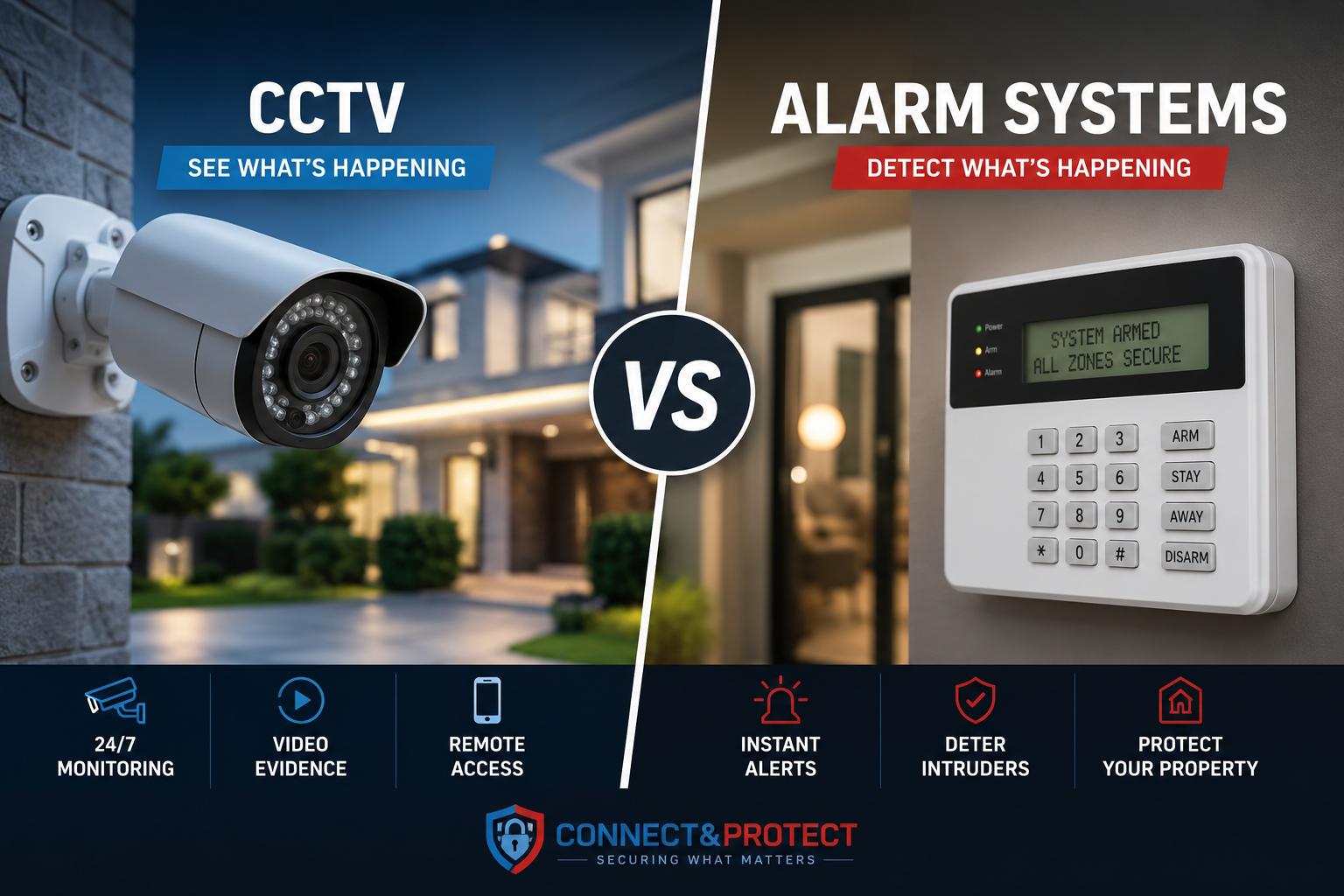
CCTV vs alarm systems — home security decisions can feel like navigating a maze of technology, features, and promises, but these two solutions dominate the conversation for Perth homeowners.
CCTV systems use strategically placed cameras to monitor activity around your home, providing live feeds and recorded footage. This visual evidence helps deter crime and can support identification in the event of an incident.
Alarm systems rely on sensors and control units to detect unauthorised entry or suspicious movement. Once triggered, sirens sound, and in some setups, notifications are sent to the homeowner or a monitoring service.
Choosing between these solutions depends on understanding their strengths, limitations, and the environments where they excel. By the end of this guide, you’ll have a clear framework for deciding which technology — or combination — offers the most effective protection for your home and lifestyle.
CCTV Systems
Closed-Circuit Television systems offer constant visual surveillance of a property through cameras linked to recording devices. They help deter crime, provide evidence for investigations, and offer peace of mind through remote access features.
Pros
- Continuous Monitoring – CCTV operates around the clock, capturing every event within its field of view.
- Crime Deterrence – Visible cameras can discourage intruders from attempting unlawful entry.
- Evidence Collection – Footage can assist law enforcement in identifying suspects and resolving disputes.
- Remote Access – Many modern setups allow homeowners to view live or recorded footage via mobile apps.
Cons
- Initial Cost – Quality systems with multiple cameras can represent a significant upfront investment.
- Privacy Concerns – Improperly placed cameras may unintentionally capture footage beyond the property boundary.
- Maintenance – Cameras and recording equipment require upkeep, such as cleaning and occasional software updates.
- Potential for Vandalism – Exposed units may be tampered with or damaged by determined offenders.
Alarm Systems
Alarm systems use motion detectors, door and window sensors, and control panels to detect breaches. Once activated, they sound an alert — often loud enough to scare away intruders — and can notify monitoring services or the homeowner directly.
Pros
- Immediate Deterrent – Loud sirens can prompt intruders to flee before causing damage or theft.
- Rapid Notification – Systems can alert homeowners or monitoring centres in seconds.
- Flexible Configurations – Various sensors and triggers can be tailored to the home’s layout and risk profile.
- Lower Visual Impact – Unlike cameras, most components are discreet and blend into the home environment.
Cons
- No Visual Record – Without integrated CCTV, there’s no footage to review after an incident.
- False Alarms – Pets, user errors, or technical faults can trigger unnecessary alerts.
- Limited Coverage – Alarms react to breaches but do not monitor activity outside triggered zones.
- Ongoing Fees – Monitored systems may require monthly subscription payments.
| System Type | Pros | Cons |
|---|---|---|
| CCTV Systems | Continuous monitoring, crime deterrence, evidence collection, remote access | Higher initial cost, privacy issues, maintenance needs, potential vandalism |
| Alarm Systems | Immediate deterrent, rapid notification, flexible configuration, low visual presence | No visual record, false alarms, limited coverage, possible ongoing subscription fees |
CCTV vs Alarm Systems: Key Comparison Factors
Efficiency
CCTV delivers constant coverage, documenting every movement within its range — ideal for post-incident investigation and proactive monitoring. Alarm systems act as an instant deterrent once triggered, perfect for stopping intrusions in progress but unable to capture pre-incident activity.
Cost
For CCTV, the upfront investment is typically higher, especially for multi-camera setups. Ongoing costs are low unless a professional monitoring service is added. Alarm systems often cost less to install initially, though monitored versions can accrue monthly fees.
Durability & Lifespan
Quality CCTV hardware can remain operational for over a decade when maintained. Alarm system components such as sensors and control panels tend to have slightly shorter lifespans, with regular battery replacements needed to keep them functional.
Aesthetics
CCTV is more noticeable, which can boost deterrence but may not blend seamlessly with all architectural styles. Alarm systems usually have a low-profile presence, with most components hidden from view.
Environmental Impact
Both options have minimal environmental impact compared to other household systems. CCTV has more hardware, which increases electronic waste potential, though energy consumption remains modest. Alarm systems use fewer components and lower energy levels overall.
Coverage Area
CCTV can oversee both external and internal spaces with strategic camera placement. Alarm systems are limited to the range and number of sensors, which only react when a breach occurs.
Evidence Collection
Footage from CCTV is invaluable for identifying culprits and understanding incidents. Alarm systems without integrated video provide no visual proof, relying solely on logs of triggered events.
Customisation
Both systems offer customisation. CCTV allows tailored camera angles, zoom functions, and night vision capabilities. Alarm systems can be configured with different sensors such as glass break detectors, motion sensors, and door contacts.
Maintenance Needs
CCTV requires lens cleaning, occasional firmware updates, and potential hardware servicing. Alarm systems need periodic sensor checks and battery changes, along with software updates to maintain reliability.
| Factor | CCTV Systems | Alarm Systems |
|---|---|---|
| Efficiency | Monitors continuously, provides visual evidence | Responds instantly to triggers, ideal for immediate deterrence |
| Cost | Higher upfront cost, minimal ongoing fees | Lower initial cost, possible ongoing monitoring fees |
| Durability & Lifespan | Cameras and recorders last 5–10+ years with maintenance | Sensors and panels last 5–7 years, battery changes required |
| Aesthetics | Visible presence enhances deterrence, may affect facade | Discreet design, minimal visual impact |
| Environmental Impact | Moderate — more hardware but low power consumption | Low — fewer components, minimal energy use |
| Coverage Area | Wide coverage including external spaces | Limited to sensor placement and trigger zones |
| Evidence Collection | Strong — clear video proof for authorities | Weak — no visual record without CCTV integration |
| Customisation | Highly configurable camera placement and viewing angles | Flexible sensor types and arrangements |
| Maintenance Needs | Occasional cleaning, software updates, potential repairs | Battery replacements, sensor checks, software updates |
Matching Security Solutions to Your Installation Needs
CCTV for Large Properties
Expansive properties benefit greatly from CCTV coverage, as multiple cameras can be positioned to monitor wide perimeters, entry points, and outdoor activity zones. Rural homes or residences with large gardens, driveways, and outbuildings often require visibility across open areas that alarms alone cannot safeguard. Continuous monitoring provides reassurance and a strong visual deterrent to would-be trespassers.
CCTV for High-Traffic Locations
Busy households with frequent visitors, deliveries, or tradespeople gain value from recorded footage to track activity and resolve disputes if necessary. Properties situated near public pathways or busy streets can also deter opportunistic behaviour simply by having visible cameras in place.
Alarm Systems for Compact Homes
Smaller dwellings or apartments often benefit from alarm systems as a cost-effective, low-maintenance choice. Sensors placed at doors and windows can quickly detect unauthorised entry without requiring multiple cameras or extensive cabling. Their discreet appearance also ensures minimal intrusion on interior design.
Alarm Systems for Rental Properties
Rental homes or investment properties can utilise alarm systems for straightforward installation and removal. Wireless models, in particular, offer flexibility for landlords who want a deterrent without making major modifications. Monitoring services can add a further layer of protection between tenant changeovers.
Combined Systems for Comprehensive Protection
Some homeowners achieve optimal security by integrating CCTV with an alarm system. Cameras handle surveillance and evidence gathering, while alarms deliver immediate response to breaches. This hybrid approach is particularly effective for high-value homes or those in areas with elevated security concerns.
POPULAR: How to Integrate Home Security With Smart Home Devices
Final Verdict: The Best Fit for Your Home
CCTV systems excel in delivering continuous surveillance, visual deterrence, and invaluable evidence after incidents. Their main drawbacks include higher installation costs, maintenance requirements, and a more visible presence on the property.
Alarm systems shine when immediate deterrence and rapid alerts are the priority, with lower upfront costs and minimal visual impact. However, they lack the ability to capture footage, may trigger false alarms, and often incur ongoing monitoring fees.
Selecting the right option comes down to evaluating your home’s size, location, and security priorities. Large or high-traffic properties often benefit most from CCTV, while smaller homes or rentals may find alarms more practical. For the highest level of protection, a hybrid approach combining the strengths of both systems creates a layered defence.
Secure Your WA Home with Perth’s Proven Security Experts
With over 15 years of licensed industry experience, Connect & Protect delivers tailored security solutions that stand the test of time. As an ACMA-certified and WA Police-licensed installer, every project is handled with precision, transparency, and a focus on your family’s safety.
From the latest Dahua CCTV systems to advanced Ajax alarm technology, our installations are designed to meet your specific needs without hidden costs or compromises. Whether you need full surveillance coverage, immediate deterrence, or a combined approach, our team will recommend and install the most effective system for your property.
Reach out to Connect & Protect today for personalised advice or a fast, obligation-free quote.
