

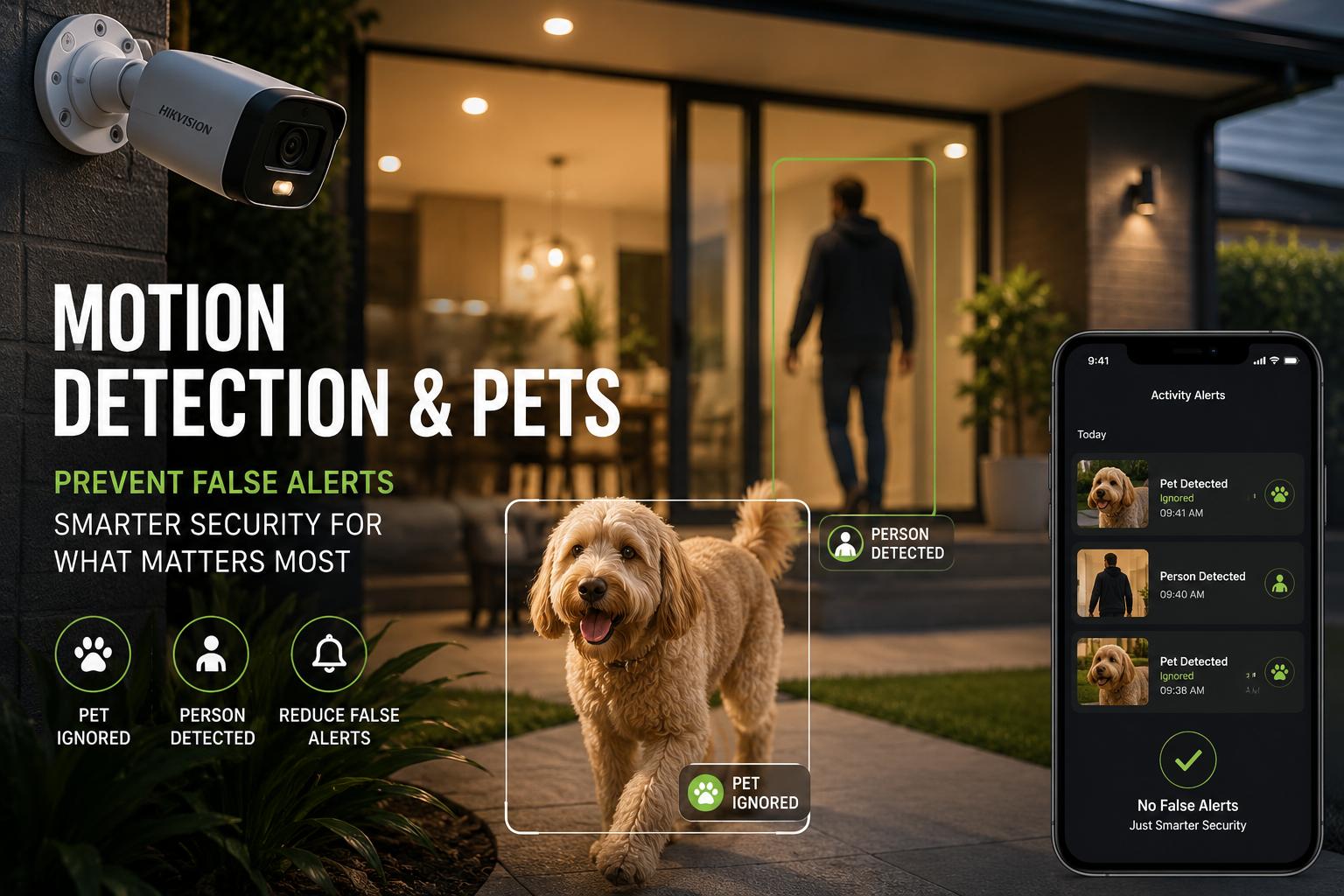
Motion detection and pets are a frustrating combination — there’s nothing more annoying than a security alert that turns out to be nothing more than a curious paw or a flicking tail.
The challenge is finding that “sweet spot” — a home security system that provides rock-solid protection without being constantly triggered by the family pet.
The good news is that by understanding how sensors actually “see” movement, you can calibrate your system to distinguish between a real security risk and a cat jumping onto the sofa — all without compromising on safety.
By the end of this guide, you’ll know how to create a calmer, more dependable home security environment that only alerts you when it truly matters.
Key Planning Factors Before Setup Begins
Environmental Elements Affecting Performance
Proper installation relies on stable surroundings to deliver accurate readings. Strong sunlight, reflective surfaces, swaying plants, or heat vents can influence how sensors interpret movement.
Perth’s dry summers and breezy afternoons may shift shadows or create thermal pockets, so thoughtful positioning helps maintain consistent behaviour. Adjusting angles, trimming vegetation, or shielding components from direct glare supports smoother operation across changing seasons.
Inspections and Ongoing Checks
Routine assessments ensure your system remains steady in the home environment. Dust, insects, or weather exposure can interfere with precision over time. Periodic inspections help maintain sensitivity levels, verify mounting stability, and confirm that updated software continues operating as intended.
Regular reviews also allow households to recalibrate settings if pets change size, habits, or activity patterns.
Matching Your Security System to Your Household Needs
Understanding Property Layouts
Every home presents unique movement paths that influence how motion detection behaves. Larger living zones, split-level designs, open-plan rooms, or enclosed nooks all affect how sensors interpret activity.
If your family has active pets, you may prefer higher mounting points or narrower detection corridors that guide readings away from favourite resting spots. Observing daily routines helps reveal patterns worth accommodating before final placement.
Evaluating Pet Behaviour
All pets develop habits that shape what your security sensors perceive. Jumping, window-watching, or late-night roaming may trigger responses unless calibration suits those tendencies.
Mapping energetic zones, sleep corners, or doorways often used for quick sprints gives households a clearer idea of where alerts might occur. Considering pet height matters too — especially when pets vary in size or share spaces with each other.
Core Elements Behind Reliable Pet-Aware Detection
Sensor Units
Modern sensors provide refined heat and movement interpretation to avoid unnecessary alerts. Many households lean toward reputable brands like Dahua or Ajax for consistent performance, broad compatibility, and strong resilience within Perth’s coastal climate.
Features Worth Prioritising
Look for adjustable sensitivity profiles, pet-tolerant motion bands, and stable firmware support. These features maintain steady responses when pets wander beneath set thresholds.
Compatibility Considerations
Ensure your chosen security systems integrate smoothly with your home’s existing wiring, Wi-Fi strength, or recording platform. Matching capabilities early prevents later configuration issues.
Recording and Monitoring Hubs
Central hubs store or relay footage, creating continuity for longer review periods. High-capacity drives, reliable power supplies, and accessible ports reduce the chance of data gaps. Dahua recorders remain common in Perth due to robust build quality and straightforward app pairing.
RELATED: Dahua vs. Amcrest – What’s Right For You
Storage Options
Adequate drive space matters, particularly when multi-pet activity produces short bursts of recorded clips throughout the day. Choose storage suited to your planned retention length.
App and Interface Platforms
Modern app platforms control calibration, notification settings, and remote access. Households benefit from clean dashboards offering easy toggles for sensitivity, exclusion zones, or night-time adjustments. Ajax, Dahua, and similar software ecosystems provide strong stability while giving homeowners confidence in day-to-day operation.
Mounting and Support Hardware
Brackets, arm mounts, sealing grommets, and cable sleeves form essential support items for tidy, weather-ready placement. Perth’s afternoon winds and coastal air can stress poorly fitted materials, so sturdy metals or UV-rated plastics perform best over time.
Step-By-Step Setup for Accurate Pet-Friendly Detection
Step 1: Preparing the Area
Assess wall strength, ceiling height, and nearby movement paths before lifting any tools. Clear furniture, remove loose objects, and create unobstructed access around chosen points. Pets should remain in another room during this stage to prevent distractions or accidental bumps.
Step 2: Positioning Sensor Units
Mount sensors at recommended heights so movement passes across rather than directly into the lens. Slight downward angles help reduce responses from playful jumps or tail flicks. Ensure fields of view avoid popular pet tracks such as couch edges, window sills, or food corners.
Step 3: Connecting to Power or Network
Attach cables or pair wireless modules while confirming secure connections. Loose wiring may cause intermittent dropouts, leading to unpredictable alerts. Keep cords tidy using clips or sleeves to avoid snagging during cleaning routines.
Step 4: Calibrating Sensitivity
Begin with moderate thresholds, then fine-tune based on pet size and behaviour. If pets roam at night, consider narrower zones or a reduced range to prevent minor movements from triggering notifications.
Step 5: Testing the Setup
Conduct controlled walk-throughs while monitoring app feedback. Invite pets into the area once initial checks confirm stability. Watch for repeated false triggers, delayed alerts, or blind spots — and adjust accordingly.
How Much Does Pet-Friendly Home Security Cost?
| Item / Inclusion | Approximate Cost | Notes |
|---|---|---|
| Base Package (4 x 6MP SMD cameras) | $1,799 | Includes free upgrade to 8-channel NVR + 3TB drive |
| Additional SMD Camera | $300 each | Added when expanding detection coverage |
| Upgrade to TiOC | +$150 per unit | Enhanced features for refined detection |
| Optional Accessories | $20 – $150 | Angled plates, shading covers, wiring sleeves |
| Professional Installation | Varies by property | Higher for multi-level or complex layouts |
| Ongoing Maintenance | Minimal | Small upkeep depending on home conditions |
Final Takeaways
Managing motion sensitivity around lively pets becomes far simpler when households understand how environment, placement, behaviour, and calibration all interact.
- Thoughtful positioning reduces unnecessary triggers caused by shadows, heat pockets, or playful pets.
- Sensitivity tuning, angle adjustments, and exclusion zones refine detection accuracy.
- Reliable sensors, sturdy mounts, and compatible hubs form essential foundations.
- Routine inspections help maintain stability as seasons shift or pet habits evolve.
Ready to Give Your Home the Protection It Deserves?
If you’re tired of your pets triggering constant false alarms, Connect & Protect can help. Our licensed experts specialise in pet-aware security, providing the advanced calibration and honest advice Perth families need to stay safe without the frustration.
Ready for a smarter, calmer security system? Reach out today for a personalised on-site assessment or an obligation-free quote.
