

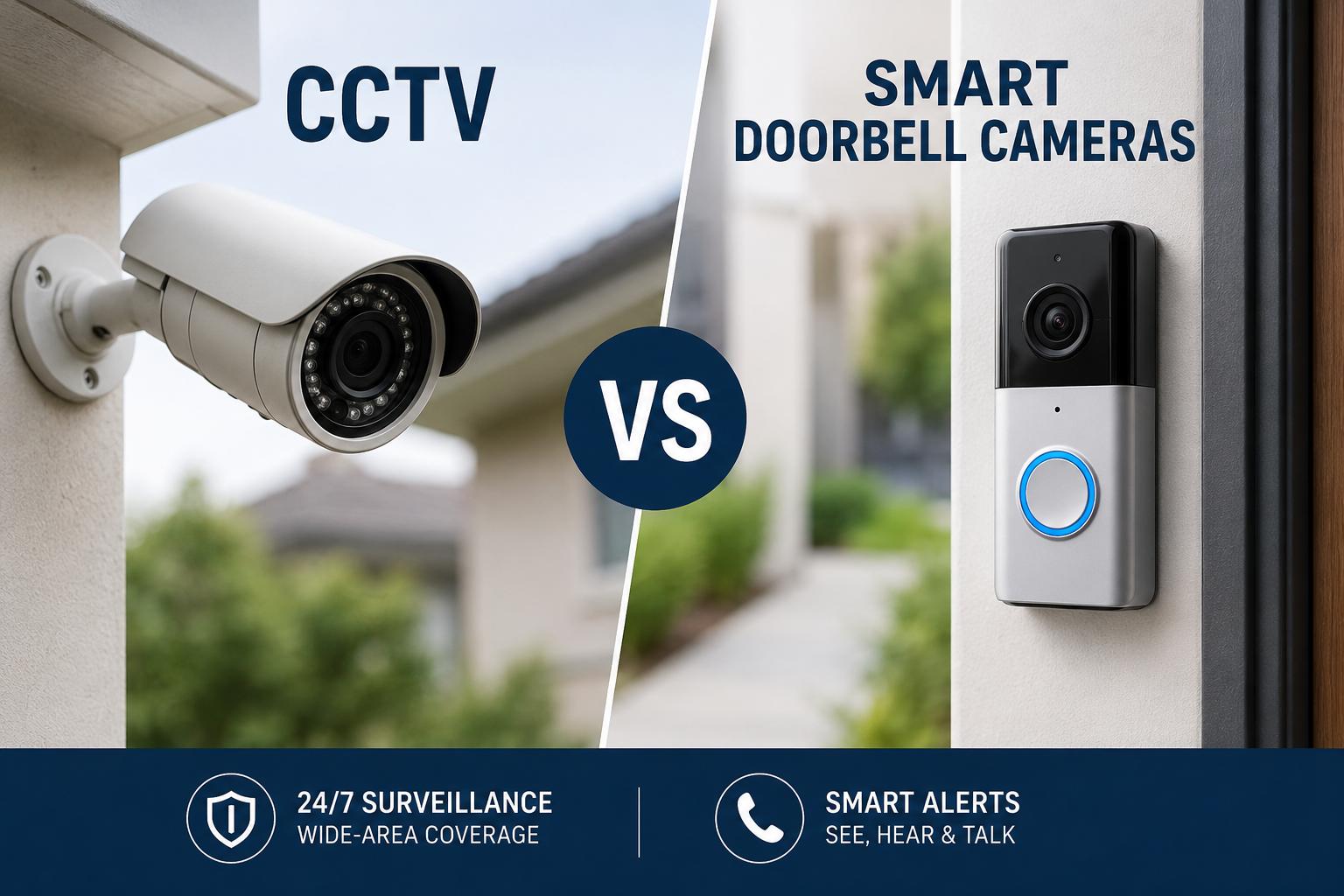
Both technologies promise visibility and control — but they serve very different needs and lifestyles. Make the wrong choice and you can end up with a huge blind spot, or you might find yourself paying for features you simply don’t need.
Understanding those distinctions helps you protect your home intelligently rather than relying on pure guesswork. Let’s explore the strengths and limitations of each system to figure out which one delivers the right blend of safety, practicality, and affordability for your Perth home.
CCTV Systems
CCTV systems remain the benchmark for complete property coverage, offering homeowners an extensive network of fixed cameras designed to monitor multiple areas simultaneously. This option excels in deterrence and long-term evidence recording, delivering unmatched visual clarity across wide spaces. However, installation complexity and cost considerations may not suit every household.
Pros
- Highly customisable sizes and configurations
- Continuous recording for consistent surveillance
- Superior image clarity in both daylight and low light
- Deterrent effect for intruders and trespassers
- Long-term footage storage for future reference
- Integration with alarm or smart systems for enhanced control
Cons
- May require professional setup and wiring
- Higher upfront investment compared to smaller systems
- Ongoing maintenance or storage management needed
- Less portable once installed
- Can feel excessive for smaller properties
| Aspect | Advantages | Disadvantages |
|---|---|---|
| Coverage | Multiple angles, full-property visibility | Complex installation and setup |
| Storage | Long-term evidence recording | May need an external hard drive or cloud plan |
| Integration | Can link with alarms, lighting, or mobile apps | Requires technical knowledge for configuration |
| Deterrence | Strong visible deterrent | Aesthetic impact on some home designs |
Smart Doorbell Cameras
Smart doorbell cameras introduce a streamlined way to safeguard entry points, combining video, motion detection, and instant mobile notifications in a compact form. This modern tool provides convenience through real-time interaction, allowing homeowners to answer the door remotely while monitoring deliveries or visitors. Yet this system focuses on a single area, which limits its broader surveillance capabilities.
Pros
- Simple installation with minimal wiring
- Real-time visitor communication via smartphone
- Compact, unobtrusive design for modern façades
- Cost-effective entry-level security enhancement
- Cloud-based storage access from anywhere
- Battery-powered models for easy relocation
Cons
- Limited field of view beyond the front entry
- Dependent on stable Wi-Fi connectivity
- Subscription fees for extended video storage
- Lower resolution than dedicated systems
- Reduced effectiveness as a standalone deterrent
| Aspect | Advantages | Disadvantages |
|---|---|---|
| Accessibility | Remote access and live alerts | Reliant on network performance |
| Design | Sleek and unobtrusive | Narrow visual coverage |
| Flexibility | Easy to relocate or upgrade | Subscription or app dependence |
| Usability | Quick setup, intuitive app control | Fewer integration options than larger systems |
CCTV vs Smart Doorbell Cameras: Head-to-Head Comparison
Efficiency
CCTV offers continuous observation across multiple vantage points, maintaining round-the-clock visual security. Advanced sensors capture motion even in low-light conditions, ensuring no gap in monitoring.
Smart doorbell cameras focus on real-time notifications rather than constant recording. Their reactive model prioritises speed of alert over comprehensive footage — ideal for those wanting immediate updates without full-scale surveillance.
Cost
While the initial purchase of a CCTV setup demands a higher outlay, long-term costs remain relatively stable once installed, with minimal ongoing fees.
Smart doorbell cameras keep entry costs low yet often include recurring payments for cloud storage or enhanced features. The choice depends on whether homeowners prefer a one-time investment or manageable periodic costs.
POPULAR: How Home Security Systems Can Lower Your Home Insurance Premiums
Durability and Lifespan
Rugged design and weatherproof casings enable CCTV systems to endure Perth’s hot summers and winter rains for years without degradation. Each camera resists exposure and tampering, providing long-term reliability.
Smart doorbell components, though sturdy, experience quicker wear due to lighter materials and battery dependence. For long-term resilience, the more robust CCTV framework holds a distinct edge.
Aesthetics
Visible CCTV hardware on exterior walls creates a professional security presence, reassuring occupants while discouraging unwanted visitors. However, some prefer less conspicuous alternatives.
Smart doorbell cameras blend effortlessly into façades, maintaining curb appeal without altering home design. Those valuing discretion often lean toward this minimalist format, while others embrace visibility as part of a deterrence strategy.
Environmental Impact
Wired CCTV configurations consume consistent energy, operating continuously without interruption. Although efficient in performance, this method relies on a sustained electrical supply.
Battery or low-voltage doorbell systems reduce overall energy draw and can integrate with renewable sources. For eco-conscious households, this option offers a smaller environmental footprint and flexible charging cycles.
Installation and Coverage
Installation of a full CCTV setup requires skilled technicians to configure wiring, storage, and positioning for maximum visibility. The process takes time but ensures accuracy.
Plug-and-play doorbell models can be mounted within minutes using basic tools — ideal for renters or homeowners preferring simplicity. Yet that ease comes with coverage trade-offs: smaller zones and fewer viewing angles.
Scalability and Flexibility
Expanding CCTV coverage proves straightforward, as additional cameras integrate seamlessly into existing infrastructure. Families with large yards, driveways, or side access points appreciate this scalability.
The compact doorbell unit, while adaptable in location, remains limited by design to monitoring one entrance. Broad estates favour full CCTV systems; smaller dwellings benefit from the agile simplicity of a doorbell camera.
| Factor | CCTV Systems | Smart Doorbell Cameras |
|---|---|---|
| Efficiency | Full-time monitoring across multiple zones | Instant alerts focused on entry areas |
| Cost | Higher initial expense, minimal recurring charges | Low entry price, possible subscription fees |
| Durability | Built to last under diverse weather conditions | Moderate resistance, shorter service lifespan |
| Aesthetics | Larger, visible fixtures | Compact, discreet design |
| Environmental Impact | Wired power draws continuous energy | Battery-powered units reduce consumption |
| Installation | Professional setup required | DIY-friendly mounting |
| Coverage | Extensive visual range | Limited to front or single access points |
| Scalability | Easily expanded for larger homes | Best for smaller or single-entry dwellings |
How to Match Security Technology to Your Home Layout
Small Interiors or Apartments
Compact living spaces demand streamlined solutions that balance security with a minimal footprint. A smart doorbell unit fits perfectly here, offering front-entry monitoring without cluttering walls or requiring complex cabling. You gain immediate visual access to visitors through mobile notifications while preserving space. Larger CCTV systems may prove excessive in smaller dwellings, both in cost and physical presence.
Large Open-Plan Spaces
Expansive homes with multiple access points benefit from a networked CCTV arrangement covering driveways, gardens, and side entries. A full-scale surveillance system captures broad angles and delivers centralised footage management, ensuring no blind spots across the property — particularly valuable for households prioritising perimeter security.
Multi-Level Properties
Two-storey or split-level homes often require strategic placement across stairwells, balconies, and entrances. Fixed CCTV lenses positioned at varied heights deliver overlapping views that prevent coverage gaps between floors. A doorbell camera complements this setup by handling door-level interactions, providing a complete perspective from gate to rooftop.
Wet or Humid Environments
Coastal suburbs or areas exposed to heavy rain benefit from rugged outdoor hardware resistant to moisture, corrosion, and extreme temperatures. CCTV systems featuring weather-sealed enclosures ensure uninterrupted operation under harsh conditions. Compact doorbell cameras can function effectively under eaves or covered porches but may require additional shielding in exposed zones.
Rental Properties or Short-Term Residences
Many tenants prefer non-invasive installations that avoid structural modifications. A portable smart doorbell offers convenience without breaching tenancy agreements — quick removal upon relocation makes it ideal for renters. Permanent wired CCTV frameworks suit homeowners planning long-term occupancy who value consistent power and stability.
Heritage or Architecturally Sensitive Homes
Older or design-conscious properties benefit from subtle technology that preserves aesthetics. Compact, stylish doorbell units blend with traditional façades, maintaining visual harmony. More visible CCTV hardware, while effective for deterrence, may detract from architectural appeal in heritage homes.
Making the Right Choice for Your Perth Home
Ultimately, there’s no single “winner” in the CCTV vs. smart doorbell debate — there’s only the system that’s the right fit for your unique Perth lifestyle.
If you’re a homeowner focused on long-term investment, frequently travel, or require non-stop evidence collection for insurance purposes, the robust continuous coverage of a multi-camera CCTV system is your strongest, most comprehensive defence.
If you’re a renter, prioritise managing deliveries, or want an instant solution that requires minimal visual impact, the smart doorbell camera is the perfect entry point.
But honestly, the most secure homes use a layered defence — a comprehensive CCTV system to watch the crucial perimeter (gates, backyard, garage) combined with a doorbell camera where the action is (the front door). This hybrid approach gives you both the detailed high-resolution evidence you need and the instant accessibility you crave.
Protect What Matters Most with Perth’s Trusted Experts
With over 15 years of licensed industry experience, Connect & Protect delivers clarity, reliability, and tailored security designed for Perth lifestyles. Every installation is handled by ACMA-certified and WA Police-licensed professionals who take pride in precision and transparency — no hidden costs, no guesswork, no compromise.
Whether you’re upgrading to advanced CCTV coverage or exploring streamlined smart doorbell protection, we’ll guide you through every step with honest advice and expert insight.
Stay safe. Stay in control.
Reach out to Connect & Protect today for a personalised quote.
