
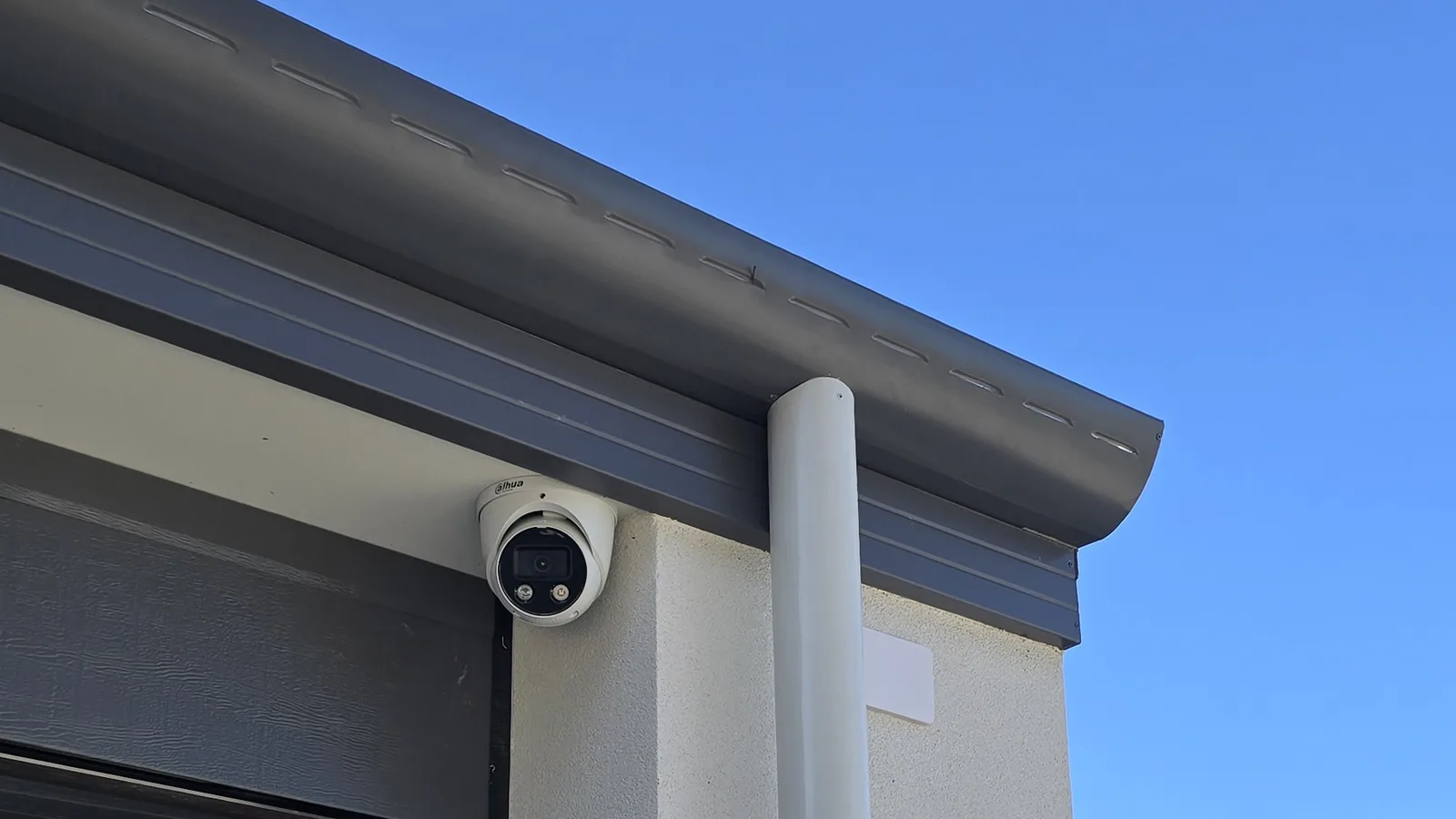
If you are building a new home, pre-wiring for security cameras probably sounds like an obvious way to make the eventual CCTV installation easier and cheaper. Sometimes it is—but for many standard single-storey Perth homes, it can actually limit the camera positions and make the installation more difficult.
Quick answer
If your home is single storey with good roof access, CCTV pre-wiring usually is not necessary. Waiting until construction is complete lets us position cameras around the finished property, including downpipes, lights, air conditioners and access paths.
Pre-wiring is important for double-storey homes, raked ceilings, low-pitch roofs and other areas that will be difficult or impossible to cable later.
Why CCTV pre-wiring can cause problems
A camera position that looks suitable on a building plan may not work once the house is finished. Downpipes, air-conditioning equipment, hot-water systems, clotheslines, patios, exterior lights and other services may affect the camera’s view or physically block the proposed installation point.
We saw this on a recent installation at a newly constructed Perth home. One pre-wire point near the garage had been placed directly beside a downpipe. Using the cable exactly where it had been left would have restricted the camera position and put the downpipe in the way.
Instead, we installed the Dahua CCTV camera in a more useful position under the eave and covered the unused pre-wire point.
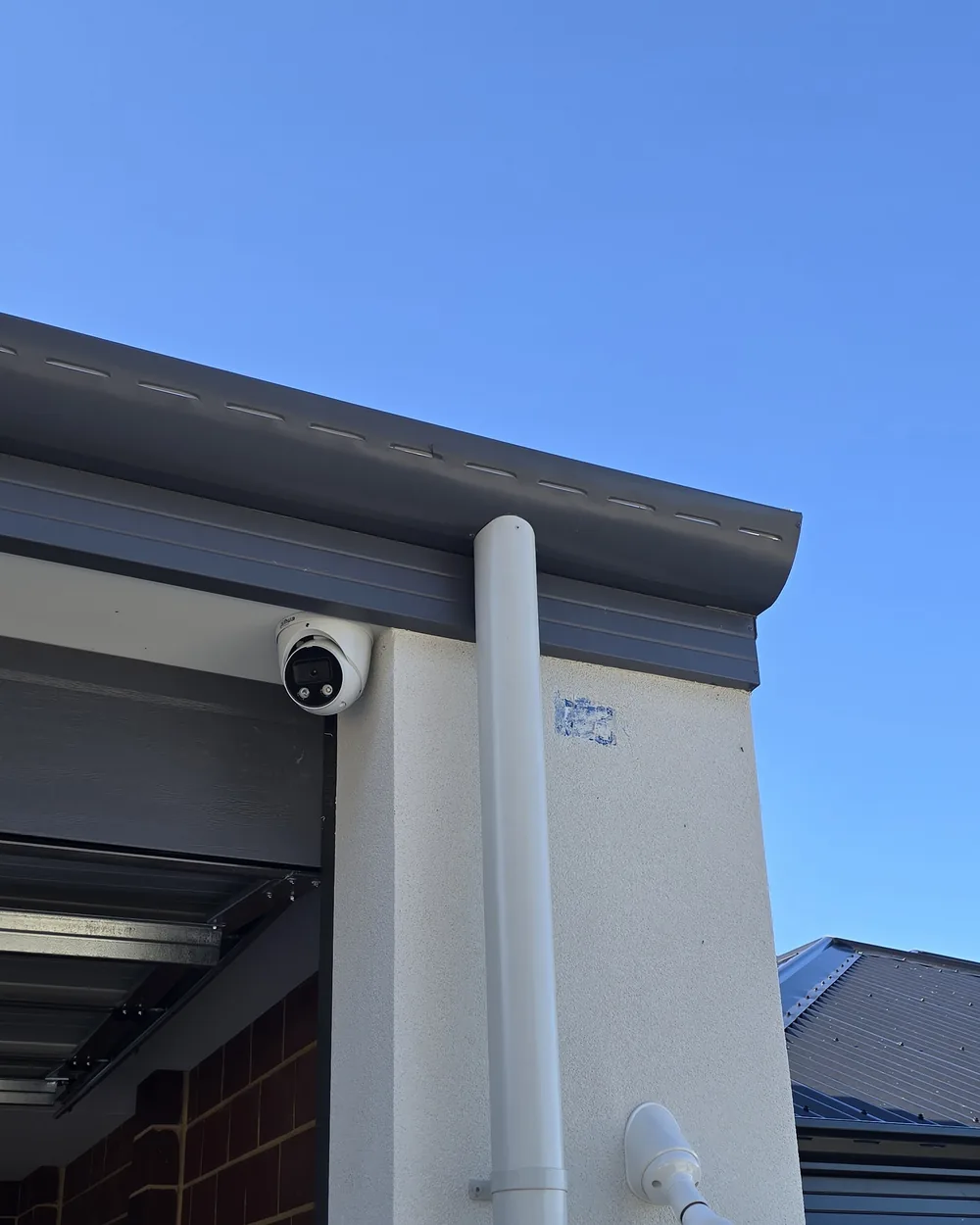
The original cable position beside the downpipe limited where the camera could be installed.
Why we often bring cameras forward under the eaves
Where the roof design allows it, mounting a camera farther forward under the eave can produce a much better result than positioning it directly against the wall.
- It provides a straighter view down the side of the home.
- It keeps more of the wall out of the camera’s field of view.
- It reduces infrared reflection from nearby walls at night.
- It can reduce reflection from built-in white LED illumination.
- It gives us more freedom to aim the camera at the area that actually needs protection.
If a camera is too close to a light-coloured wall, infrared or white light can reflect back into the lens. The nearby surface may appear very bright while the area farther away becomes harder to see. Camera position matters just as much at night as it does during the day.
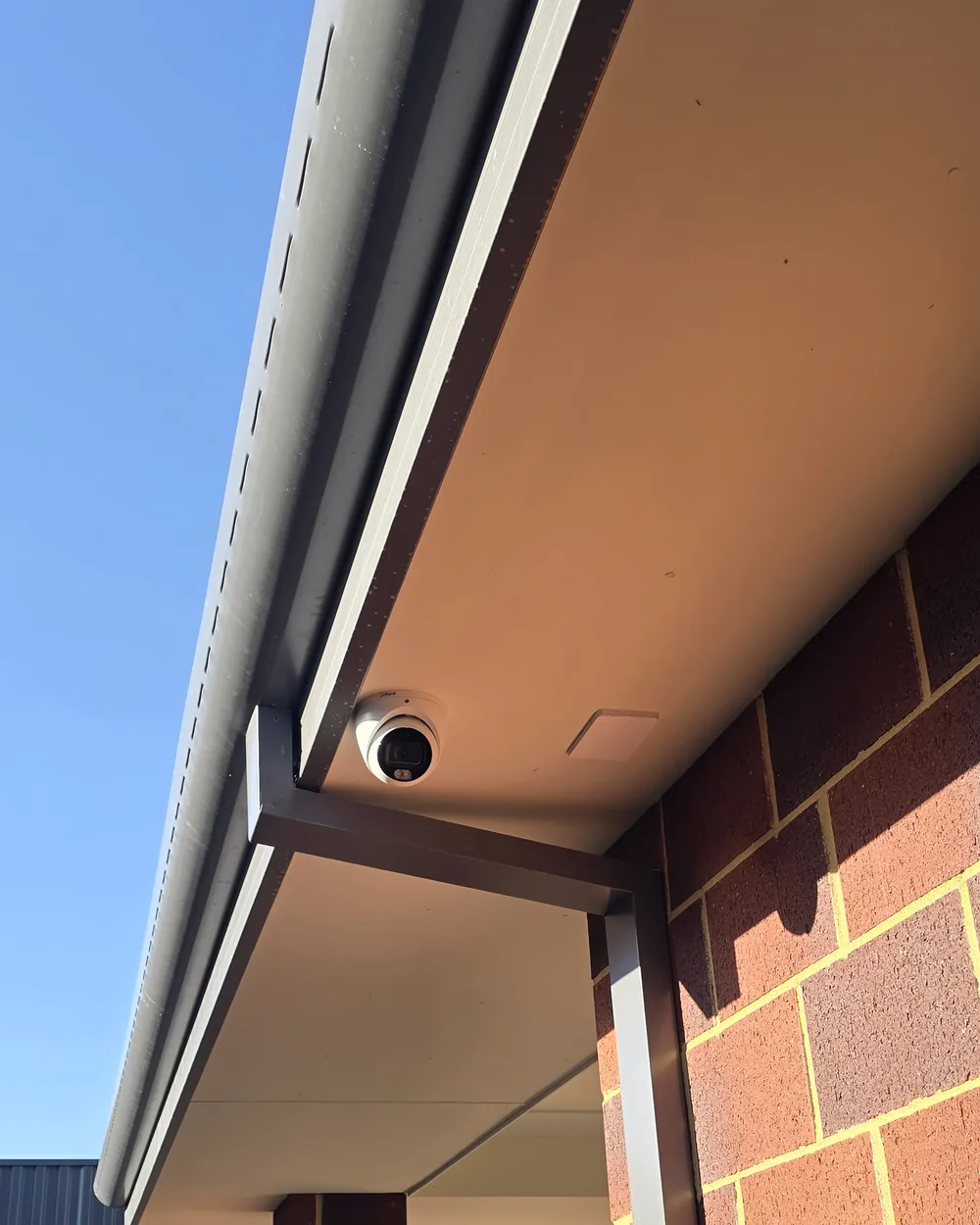
The camera was brought forward to improve the viewing angle and reduce nearby wall reflection.
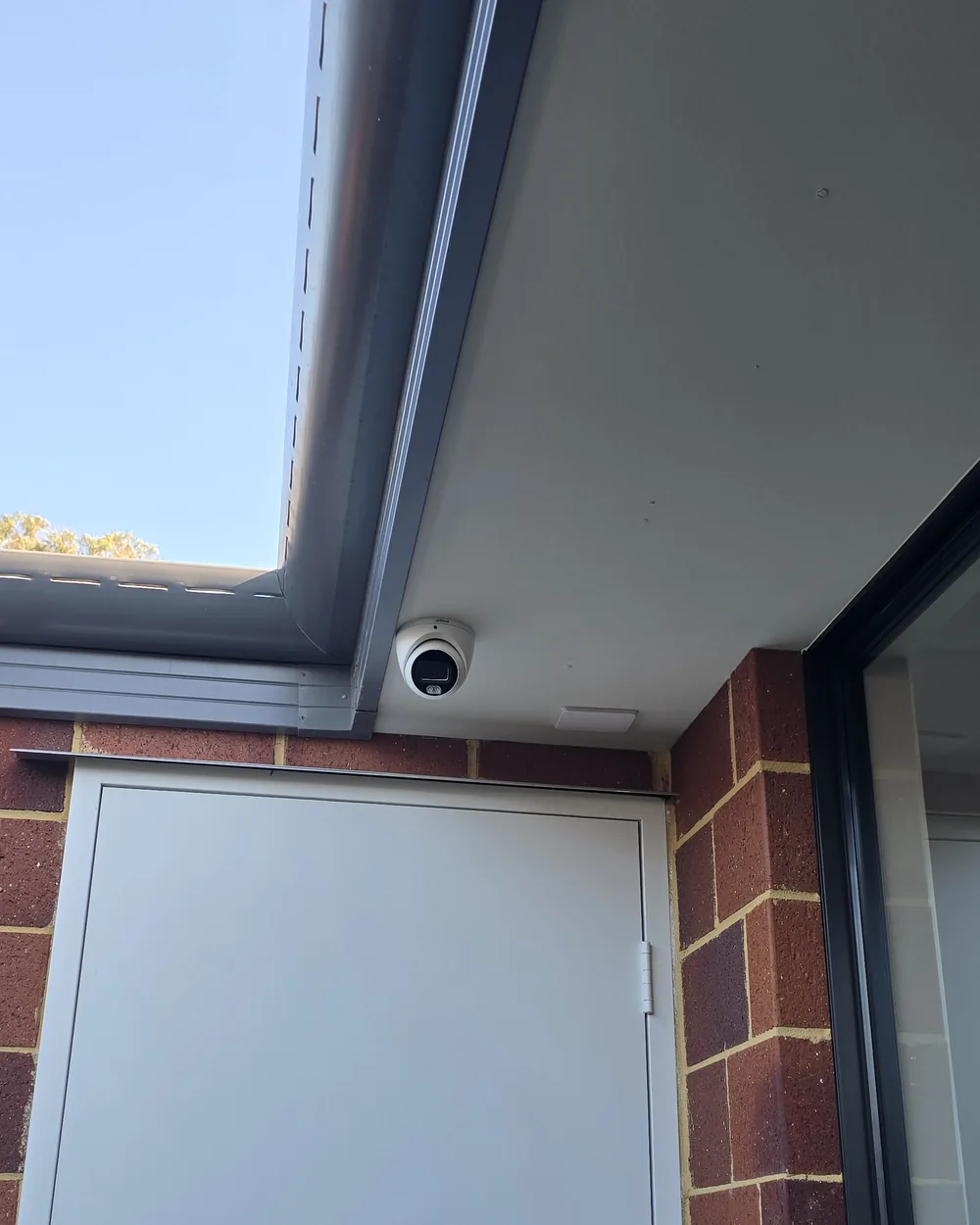
The covered pre-wire point is closer to the wall, while the camera is in a more useful position.
On this job, starting again was quicker
Although the house had been pre-wired, using and relocating the existing cables would have involved fishing them through the roof and moving them to more suitable positions. In this case, it was quicker and cleaner for us to run new cables from scratch.
The customer also wanted two additional cameras that had not been included in the pre-wire, so we needed to enter the roof and run cables regardless.
This is why a pre-wire does not automatically reduce the installation price. If we still need to access the roof, find and test the existing cables, move unsuitable points and add missing cameras, the pre-wire may save little or no time. In some cases, it makes the job more complicated.
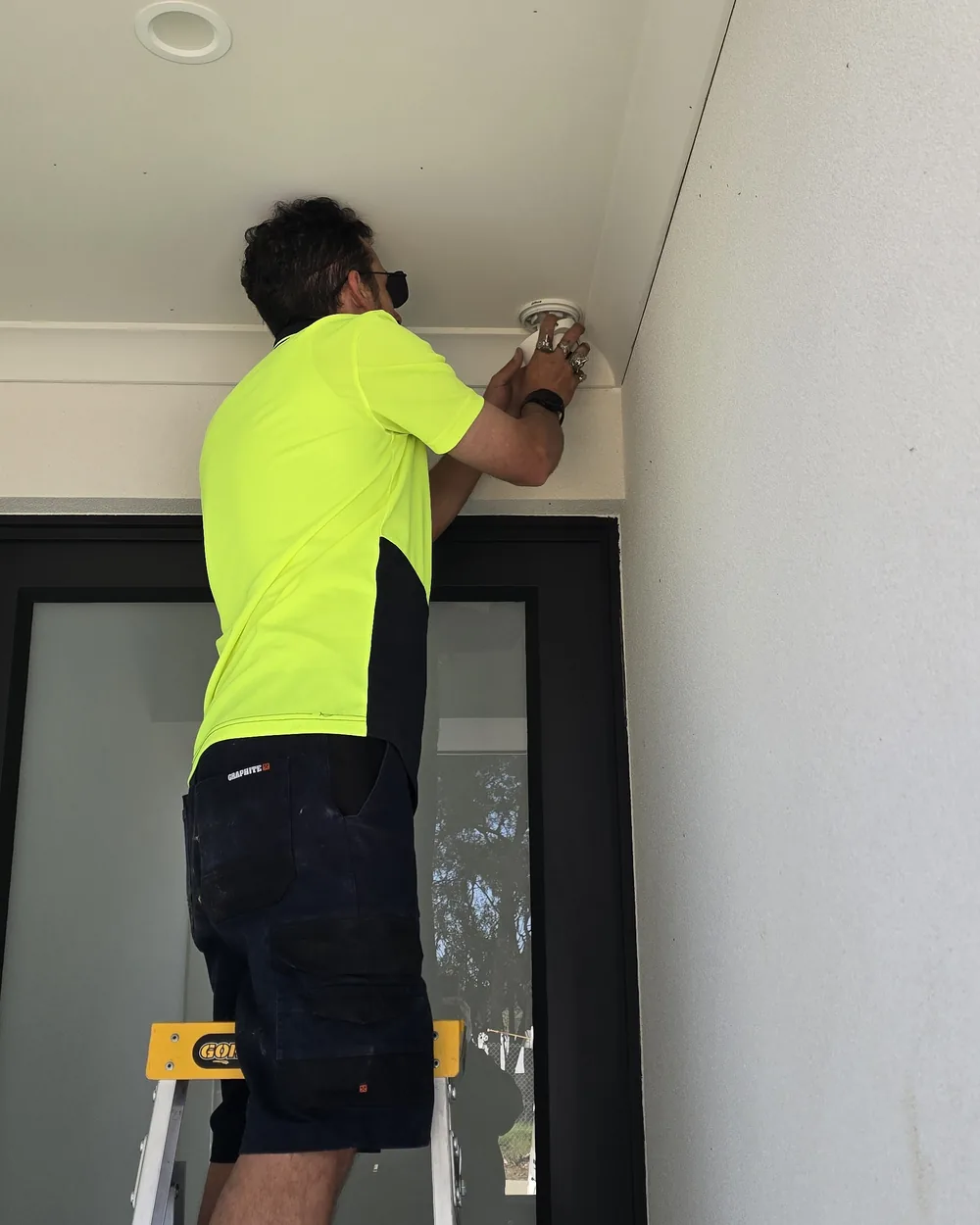
Choosing the final position around the completed entry and surrounding walls.
The advantage of choosing camera positions after construction
On an accessible single-storey home, retrofitting CCTV after construction lets us walk around the finished property with the customer and customise the system on the day.
We can see the actual locations of downpipes, gutters, air conditioners, hot-water systems, exterior lights, clotheslines, gates, side-access paths, patios and future additions. We can also assess the areas a person would realistically use to approach the home.
That allows each camera to be positioned for the view it needs to capture, rather than simply installing it where a cable happens to have been left. Learn more about our CCTV installation service in Perth.
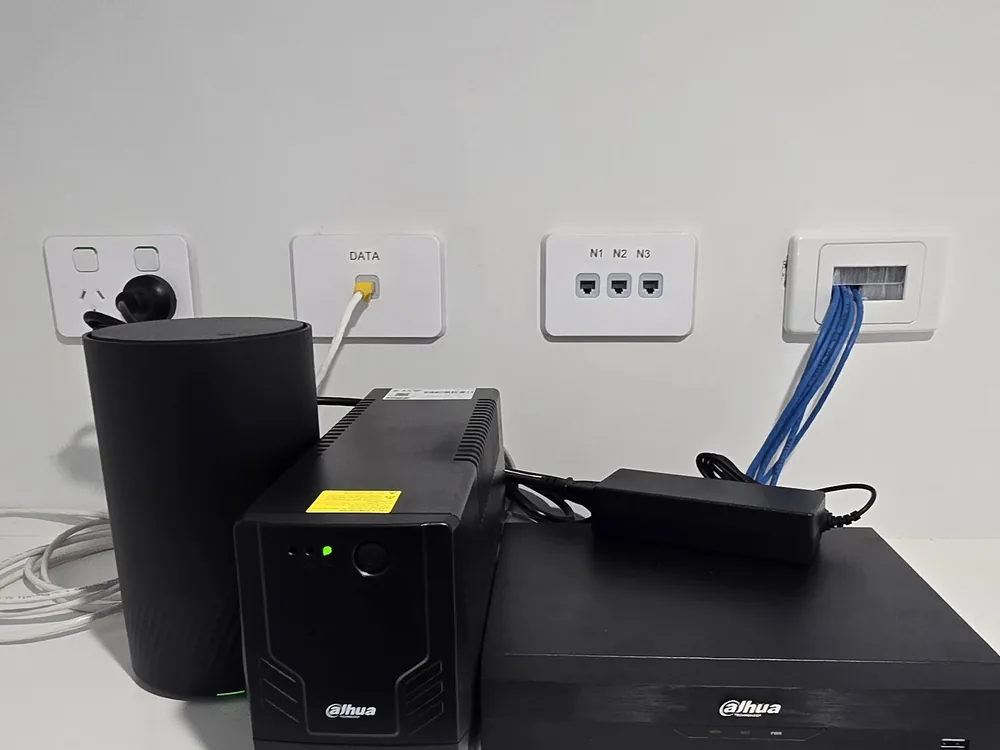
A central equipment location with power and data is often more useful than pre-wiring every camera position.
What should you organise during construction instead?
Even when camera pre-wiring is unnecessary, construction is a good time to plan a central location for your network and security equipment—often a suitable linen or communications cupboard.
- A data cable from the NBN or internet connection
- Sufficient power points
- Room for the modem, CCTV recorder and related equipment
- Suitable ventilation around powered equipment
- Practical access for servicing and future upgrades
A central modem location can also improve Wi-Fi coverage compared with placing it at one far end of the property.
Another useful construction-stage provision
Ask your builder about installing a spare 25 mm conduit from a wall plate to the ceiling space on any single-leaf wall where a television or other equipment may be installed later. These walls can be difficult to cable once construction is complete. Any conduit or cabling should be discussed with the builder and completed by the appropriately licensed tradesperson.
When should you pre-wire for CCTV?
Pre-wiring is worthwhile when running new cables after construction would be difficult or impossible. Common examples include:
- double-storey homes;
- single-storey homes with raked ceilings;
- low-pitch roofs with little or no usable roof access;
- sections beneath concrete or inaccessible structures; and
- camera locations with no cable path after the internal lining and exterior finishes are completed.
In these situations, the camera locations should be discussed before the cables are installed. We can liaise with you so the builder’s electrician or cabler understands the required locations and cable paths. We generally do not carry out construction-stage pre-wires ourselves, but early planning can prevent cables from being left in positions that are difficult to use later.
So, do you need to pre-wire CCTV?
For a standard single-storey Perth home with good roof access, usually not. Installing CCTV after construction often gives us more flexibility and can produce better camera positions because every downpipe, wall, light and external service is visible.
For double-storey homes, raked ceilings, low-pitch roofs and other properties with limited access, pre-wiring may be essential. The important part is to plan the positions with CCTV coverage in mind rather than simply adding generic camera points to the electrical plan.
Planning CCTV for a new Perth home?
Contact Connect & Protect before the cables are installed. We can review the layout, identify areas that may be difficult to reach later and help you avoid paying for pre-wire points that will not be useful.
